
Investing in the Journey of Research
Student scholars are advancing their work through hands-on research made possible by generous donors
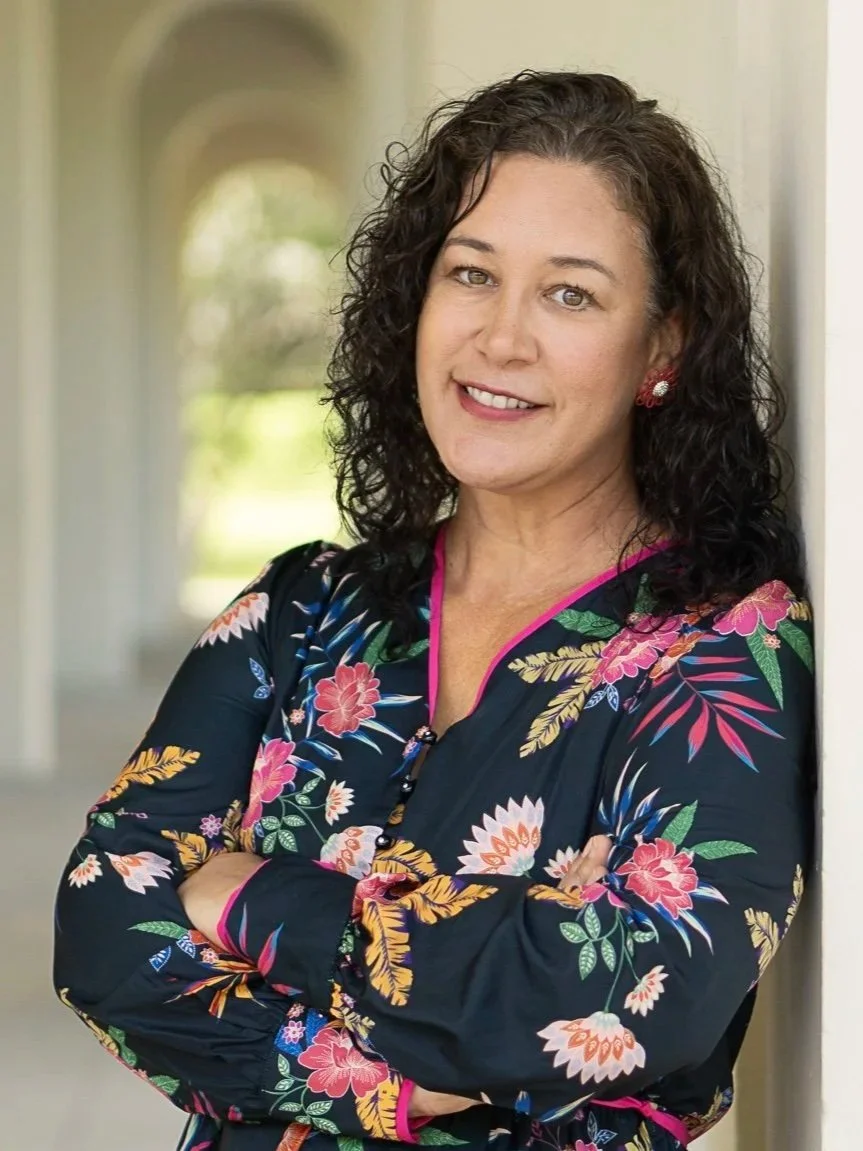
Cameron Māhealani “Māhea” Ahia, PhD Candidate

Emi Obana, EWC Graduate Degree Fellow
FOR STUDENTS AT THE EAST-WEST CENTER, RESEARCH IS NOT CONFINED TO LIBRARIES OR LECTURE HALLS. IT UNFOLDS IN ARCHIVES, SACRED LANDSCAPES, COMMUNITY GATHERINGS, AND GLOBAL CONVENINGS—places where ideas are tested, refined, and shared in dialogue with the world. Generous support from donors provides opportunities for students to pursue this work where it matters most: in the field, in conversation, and in the community.
One such opportunity is the Hawai‘i Pacific Foundation Doctoral Research Award, which supports advanced scholarship that bridges academic inquiry and lived experience. For Cameron Māhealani “Māhea” Ahia, a PhD candidate in English, the award has been instrumental in deepening research rooted in Indigenous knowledge systems and ancestral storytelling. As a diasporic Kanaka ‘Ōiwi scholar, Ahia’s work centers Hawaiian mo‘olelo as both historical record and living medicine—stories that carry ecological, spiritual, and cultural intelligence across generations.
“My love of ancestral stories has encouraged me to discover, translate, and share mo‘olelo as medicine,” Ahia explains. “Engaging these stories allows me to apply ancestral wisdom to relevant modern issues, while connecting academia to community.”
Ahia’s dissertation, “Shapeshifting Hawaiian Biography: A Mo‘o‘ography of Kihawahine,” reimagines biography beyond Western frameworks, drawing from ancestral narratives of Kihawahine, a powerful Hawaiian akua mo‘o. With support from the Hawai‘i Pacific Foundation award, Ahia traveled across Hawai‘i to visit wahi pana (sacred places), engage with elders, and retrace storied landscapes connected to Kihawahine’s many forms.
“HPF made it possible for me to travel island-wide to sacred sites and to retrace her storied footsteps,” Ahia shares. “By visiting these places and listening to elders, I am able to share this wisdom through my scholarship and storytelling.” Especially in the wake of the 2023 Lahaina fires, this work underscores the urgency of preserving mo‘olelo as carriers of ‘ike kūpuna— ancestral knowledge—and as pathways toward healing and restoration.
Complementing doctoral research support, the Ted and Doris Lee Endowed Fund plays a vital role in enabling student travel for field research, field study, internships, and conferences. Established to ensure degree-seeking students can pursue transformative learning beyond campus, the fund reflects a belief that travel is not an add-on to education, but a catalyst for deeper understanding.
In 2025, three students received travel awards through the Ted and Doris Lee Endowed Fund, each pursuing distinct yet interconnected paths of inquiry. Among them was Emi Obana, a PhD candidate in Music Composition from Japan, whose research explores music as a tool for peacebuilding. With support from the fund, Obana traveled to present her paper, “Music as Dialogue in Peacebuilding,” at the 6th International Conference for World Balance.
“Presenting at an international conference allowed me to see with my own eyes the struggles of the local people and engage in raw, heart-to-heart dialogue face-to-face,” Obana reflected. “Those encounters encouraged me to reflect on the true purpose of my education and research.” Engaging with scholars and delegates from nearly 100 countries broadened her global perspective and strengthened her commitment to music as a force for peace.
Obana also noted that participating in the conference helped her clarify the uniqueness of her work and build a network that will support her future professional endeavors. “The experience inspired me to deepen my commitment to peace as a global citizen while strengthening my sense of purpose as a scholar,” she said.
Together, these awards illustrate the East-West Center Foundation’s commitment to student-centered research—work that travels outward and returns enriched. By investing in students like Māhea Ahia and Emi Obana, philanthropic partners help cultivate scholars whose research is grounded, globally engaged, and deeply responsive to the communities they serve.